The danger of being a One-method Project Manager
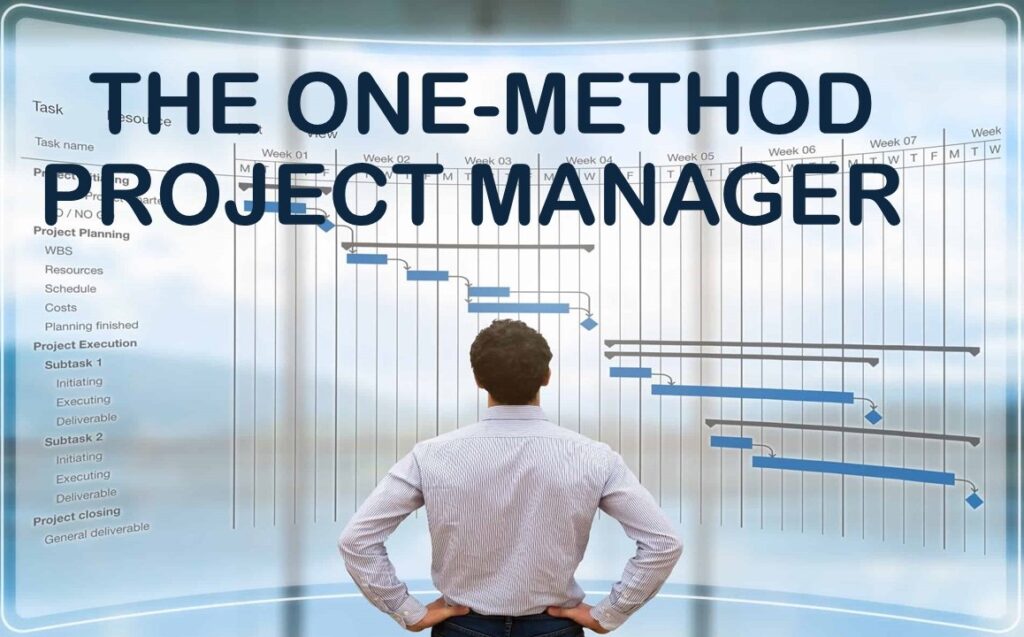
In this third and final part of our series on the top three challenges most likely to derail a project manager’s career we discuss the danger of being a one-method Project Manager.
Project management today is almost unrecognizable compared to a decade ago. Agile and hybrid approaches are now the norm. Cross-functional teams move in fast cycles. Remote and distributed collaboration is standard. And AI and automation are reshaping how we plan, analyze, and report.
For aspiring and early-career project managers, this shifting landscape is both a threat and an opportunity. The threat is real: if you rely on a single way of working and stop learning, your career can stall faster than you expect. The opportunity is equally real: if you build an adaptable skill set early, you become highly valuable across many different types of projects and organizations.
The danger of being a “one-method PM”
A subtle but common risk for new project managers is becoming attached to one way of doing things. Maybe you learned traditional predictive planning in your first role and now try to apply it everywhere, even in fast-moving environments where it doesn’t fit. Or perhaps your first experience was with agile methods, and you’ve decided that everything must be sprints and backlogs – even where regulatory or contractual constraints demand more structure.
In both cases, the problem is rigidity. Projects live in different contexts. Some need heavy upfront planning; others require rapid experimentation. Many need a balance of both. If you can only operate at one end of that spectrum, you become harder to place on diverse, high-visibility initiatives.
Building a balanced foundation
Your aim as an early-career project manager is not to become an expert in every methodology immediately. Instead, focus on building a balanced foundation across three areas:
Predictive practices. Learn how to break work into manageable components, sequence tasks, identify dependencies, and build a simple schedule. Understand why critical path, baselines, and change control exist – and how they protect projects with fixed constraints.
Core agile ideas. You don’t need to become a full agile coach, but you should be comfortable with iterations, backlogs, user stories, stand-ups, demos, and retrospectives. More importantly, absorb the mindset: delivering value in small increments, empowering teams, and embracing continuous feedback.
Business and data literacy. Know how your organization creates value and how your project connects to revenue, cost reduction, risk, or strategic goals. Learn to read simple dashboards, interpret trends, and use data to inform decisions – not just to report status.
These three pillars give you a flexible toolkit. When you encounter a new environment, you can mix and match practices intelligently instead of forcing a single model on every situation.
Learning by doing, not just reading
You don’t need to wait for a perfect training opportunity. You can experiment within your current responsibilities.
On one project, formalize your schedule and tracking a little more – using a structured plan to sharpen your predictive skills. On another, introduce lightweight agile practices such as a Kanban board, daily stand-ups, or bi-weekly retrospectives. In each case, pay close attention to what works in that context and what doesn’t.
Treat this as deliberate practice. Before starting a new assignment, choose one or two techniques you will consciously apply. Afterward, reflect on the impact. Did it improve clarity? Collaboration? Risk awareness? Over time, this habit builds both your skill and your judgment simultaneously.
Embracing AI and automation
Another major shift in the profession is the growing role of AI and automation. For some, this feels threatening. In reality, what AI is most likely to replace are repetitive, mechanical tasks: manual report formatting, basic data aggregation, boilerplate document drafting.
For you, this is an opening. If you use AI and modern tools effectively, you free up time from low-value work and redirect it toward the highest-value parts of project management: stakeholder engagement, decision facilitation, risk thinking, and strategic alignment.
Start with practical uses – drafting communications, brainstorming risk lists, generating initial work breakdown structures, or summarizing meeting notes. Then, as the human project manager, you review, tailor, and apply context. The goal is not to abdicate thinking. It is to accelerate it.
By becoming an early and confident adopter of these tools, you position yourself as someone built for the modern workplace. That is a compelling edge for a young professional.
Own your development like a project
The foundation of adaptability is continuous, intentional learning. Yet many early-career project managers treat their own development passively – waiting for their organizations to send them to training or assign them to interesting work.
But a more powerful approach is to manage your growth the same way you manage a project.
Set clear learning goals for the next 6 to 12 months. Define specific actions that move you toward those goals – targeted reading, communities of practice, shadowing experienced colleagues, or stretch assignments. Review your progress quarterly and adjust as you grow.
And when managers and stakeholders see you taking consistent initiative for your own development, they are far more likely to support and accelerate it. Over time, that self-directed learning becomes a defining part of your professional brand.
Future-proofing your PM career
The tools and methods of project management will continue to evolve. New frameworks will emerge. New technologies will automate parts of the work. New business challenges will demand new ways of organizing and delivering change.
Although you cannot control those shifts, you can control how you respond to them.
If you cling to a fixed approach because “this is how I learned it,” you risk becoming obsolete faster than you expect. But if you stay curious, build a balanced methodological base, experiment deliberately in your own work, and embrace technologies that amplify your impact – you become resilient. Not just for today’s environment, but for whatever comes next.
However, the most important skill you can cultivate is not a specific methodology. It is the ability to adapt your methods thoughtfully to the needs of each situation. That adaptability will keep your career moving forward long after today’s buzzwords have faded.
Start building your adaptable PM career today
If you are serious about developing the well-rounded, future-ready skills this article describes, I have built the courses to get you there.
My Project Management Fundamentals course gives you a solid grounding in the core practices – planning, scheduling, risk management, and delivery – that every PM needs regardless of methodology. And my Leadership Development for Managers and Team Leaders course equips you with the mindset, communication skills, and adaptive thinking to lead effectively as the world around you keeps changing.
👉 Don’t wait for the perfect moment to invest in yourself. Enroll today and give your career the head start it deserves.