HOW PROJECT MANAGEMENT SKILLS IMPACT YOUR CAREER
There is a quiet ceiling that stops many talented professionals from advancing – and it is not intelligence, work ethic, or technical ability. It is project management.
Over three decades of executing complex EPC/EPIC projects for major operators, I have watched brilliant engineers and other professionals plateau at the same career stage – not because they lacked capability, but because they never built the skills required to plan, coordinate, and deliver at scale. Here is what that gap actually costs you.
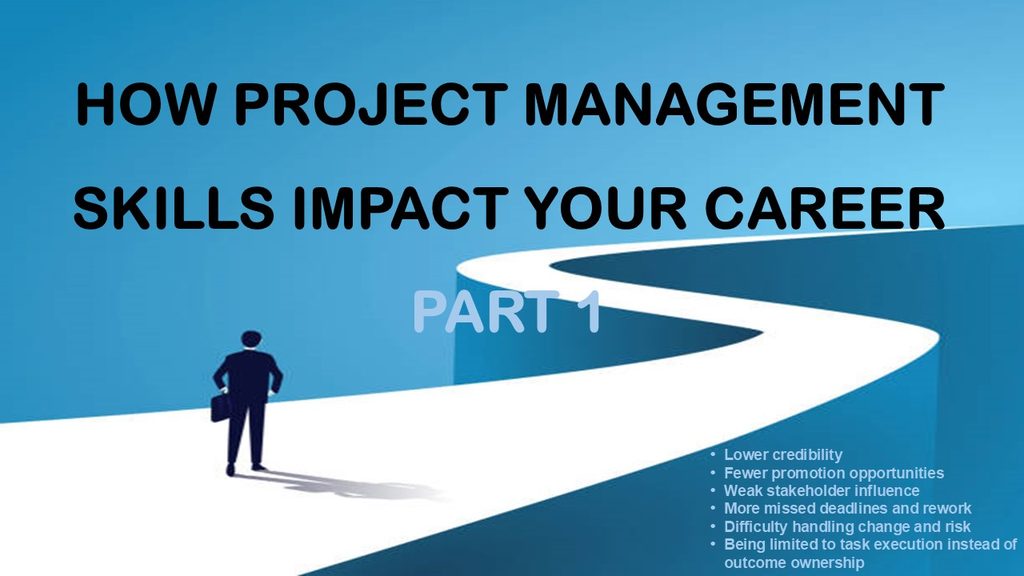
1. Lower Credibility
Credibility is built on consistency. If you struggle to plan your work, prioritize competing demands, or follow through on commitments, people notice – even when the underlying work is good. Over time, colleagues and leaders begin to see you as someone who cannot be trusted with complex, high-stakes work. That perception, once formed, is difficult to reverse.
2. Fewer Promotion Opportunities
Project management skill is one of the clearest signals of leadership readiness that an organization has. It shows you can think beyond your own task list and take responsibility for outcomes that depend on other people. Without that signal, moving into team lead, manager, or cross-functional roles becomes an uphill climb – not because you lack potential, but because no one has seen evidence that you are capable.
3. Weak Stakeholder Influence
Influence is earned through clarity, not effort. If you cannot manage expectations, communicate progress in a way that builds confidence, or align people around a shared outcome, you lose visibility with the sponsors and senior leaders who make decisions about your future. Being good at your job is not the same as being seen as good at your job – and stakeholder influence is what closes that gap.
4. More Missed Deadlines and Rework
Delays rarely come from laziness. They come from poor scope control, weak planning, and coordination gaps that create confusion downstream. The result is avoidable rework, missed deadlines, and a performance record that looks inconsistent – even when the root cause was never a lack of effort, but a lack of structure.
5. Difficulty Handling Change and Risk
Every meaningful role today requires adapting quickly, spotting issues before they escalate, and responding in a structured, calm way. Without project management fundamentals – risk management plan, change management plan, structured decision-making – professionals tend to react to problems rather than anticipate them. That difference is often what separates someone who “looks capable” from someone who “looks overwhelmed,” even when both are equally hardworking.
6. Being Limited to Task Execution Instead of Outcome Ownership
This is the deepest cost of all. Without project management skills, you may be seen as someone who reliably completes assigned work – but not someone trusted to own an initiative end to end. That distinction is the real line between individual contributor and leader. One executes tasks. The other delivers outcomes, manages ambiguity, and carries accountability for results that matter to the business. Some has put it very succinctly, “He who know the How will always get a job but he who knows the Why will always be the boss!
The Real Cost
Taken together, these six gaps do more than slow you down on individual projects. They stall your entire trajectory – from someone who does good work, to someone trusted to lead it. Delivery, visibility, influence, and strategic responsibility all run through the same set of skills: the ability to plan, coordinate, communicate, and deliver under pressure.
The encouraging part is that none of this is fixed. Project management is not an innate trait some people are born with – it is a discipline built through structured learning and deliberate practice. I have watched engineers with strong technical sills but no formal project management training develop, in a matter of weeks, the frameworks that changed how their leadership saw them.
That is exactly the shift I built Project Management Fundamentals to create. It draws directly on decades of EPC/EPIC delivery for operators like Shell, Chevron, and Qatar Petroleum – translated into practical frameworks you can apply immediately, whether you are managing your first cross-functional initiative or preparing for formal certification.
If any of the six gaps above sounds familiar, it may be worth asking yourself a simple question: am I currently building the skills that get me seen as a leader – or just the skills that keep me busy as a contributor?
If you’re ready to close that gap, you can find the details here.